This Week's Story The Way We Cook Starts to Change 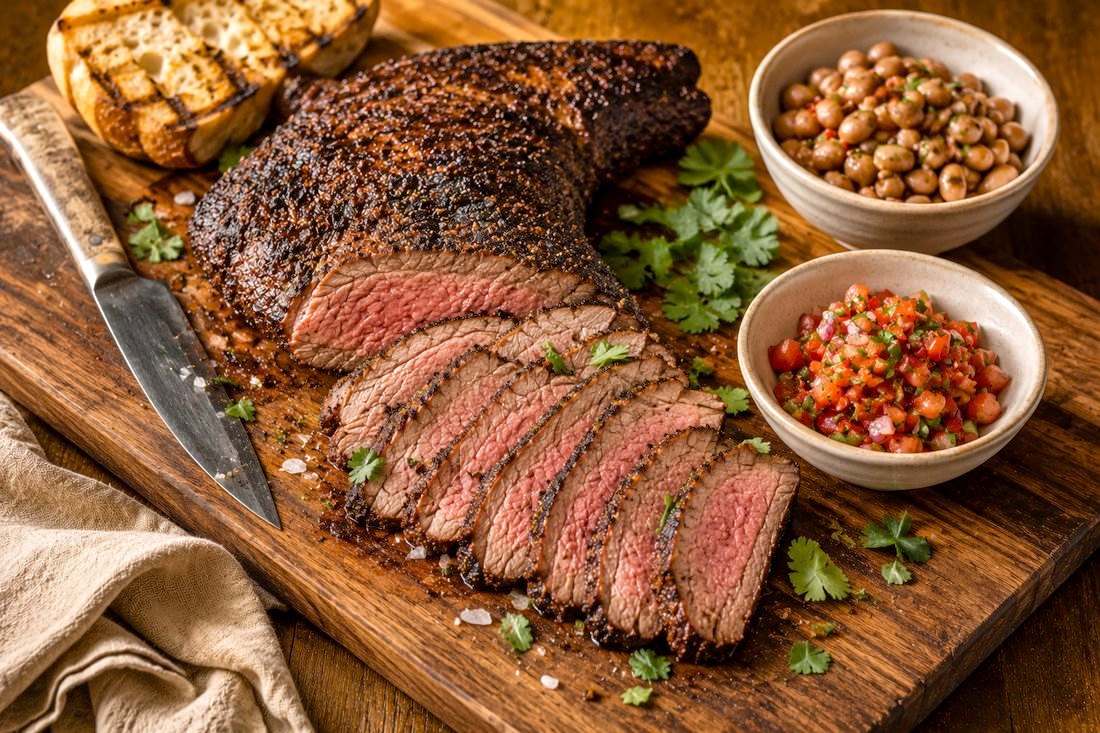 One more fire. Santa Maria Tri-Tip, still holding onto summer. Labor Day has always felt like the end of summer to me. Technically, of course, summer is still here. And in California, it can feel like summer for quite a while longer. We talked last week about that overlap, the peaches sitting next to apples, tomatoes still going strong while squash begins showing up. But something else starts changing around this time too. The way we cook. The grill is still going. Tomatoes are still beautiful. Corn, figs, peppers, eggplant, grapes and summer squash are all still giving us plenty to work with. But suddenly I start thinking about roasting. About a pot of something cooking slowly. About sage and rosemary. About squash. About polenta. About peppers blistering over a flame. About a pot of beans next to something coming off the grill. The ingredients haven't disappeared. We're just starting to ask them different questions. The Same Ingredient Can Have More Than One Season That's one of my favorite things about cooking. Take a tomato. At the height of summer, I might slice a beautiful heirloom tomato, season it properly, dress it with a vinaigrette and put a piece of fish right next to it. There isn't much reason to mess with it. But I can take another great tomato and slowly roast it at 225 degrees for a few hours. Now I'm concentrating everything that made that tomato good in the first place. The sweetness gets deeper. The flavor becomes more complex. That tomato might end up beside a steak or folded into something completely different. Same tomato. Different treatment. Corn can do the same thing. In summer, I love it with Sungold tomatoes, green beans, basil or other bright vegetables. But corn also loves smoke. Give sweet corn some applewood smoked bacon and now you have sweetness, salt, fat and smoke. Maybe the dish needs a little acidity. Maybe an herb. Maybe another texture. That's where cooking gets fun. An ingredient has its own character, but the ingredients around it can show you another side of it. A Memorable Bite Isn't Necessarily a Louder Bite People have asked me for years how I would describe my cooking. One answer I keep coming back to is layers of flavor. But layers don't mean piling more and more things onto a plate. They have to belong together. Think about a beautiful heirloom tomato salad with applewood smoked bacon, blue cheese, basil, chives and an apple cider vinaigrette. The tomato is sweet and acidic. The bacon is salty, smoky and crisp. The blue cheese is rich and sharp. The herbs give you freshness. The vinegar wakes everything up. Maybe there is just a touch of honey to round it out. No single flavor should be screaming at you. You take a bite and everything arrives together. That's what I'm looking for when I'm tasting food. Not just, "Does it need more salt?" Texture Is Part of the Flavor I'm a huge texture guy. Sometimes a dish tastes good, but every bite feels exactly the same. That's when that one more thing can matter. Not five more garnishes. One thing. Think about a late-summer salad of figs and peaches with baby spinach and goat cheese or blue cheese. Then add toasted pecans. Now something happens. You have soft, juicy fruit. Creamy cheese. Tender greens. And then that toasted pecan gives you crunch, earthiness and another layer of flavor. Or take butternut squash ravioli. The pasta is tender. The filling is soft and creamy. Maybe you finish it with orange butter. Then toasted hazelnuts go over the top. Crispy sage. Now that soft ravioli has crunch. The sage almost crumbles in your mouth and gives you that beautiful herbaceous flavor. The hazelnut brings that toasted, earthy character. That's not adding things just to make the dish more complicated. It's contrast with a purpose. Sometimes the difference between good and memorable really is one contrasting element. Technique Should Reveal the Ingredient, Not Erase It 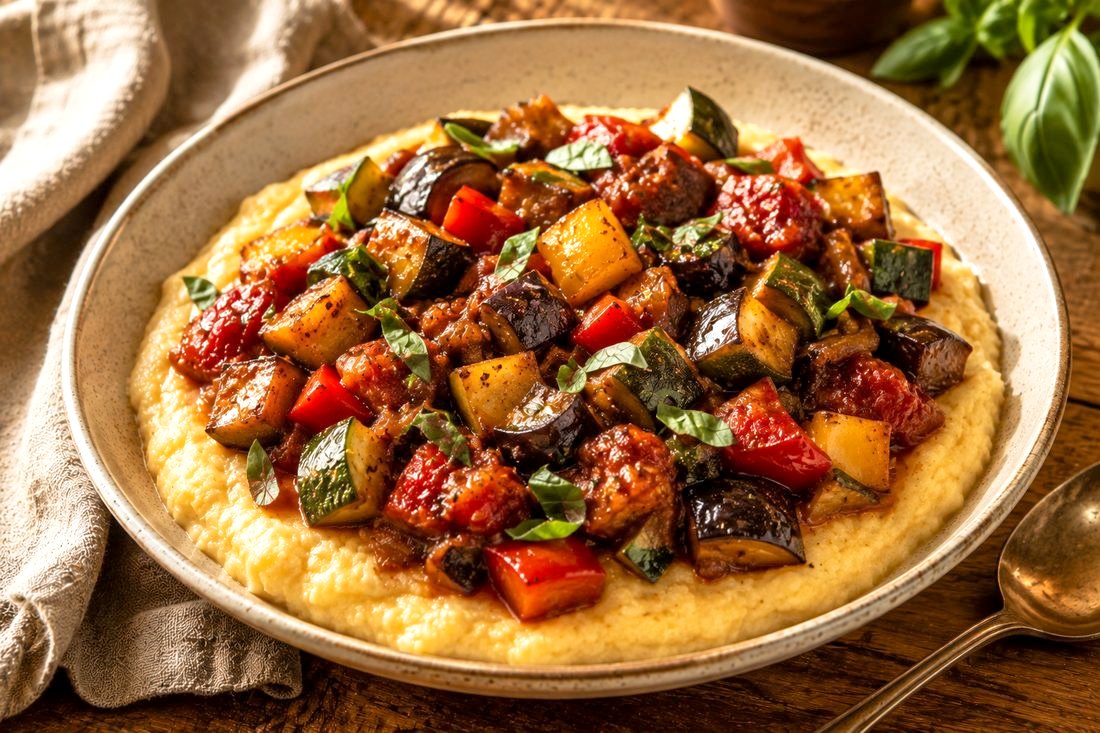 Ratatouille over creamy polenta: cooked deeper, but every vegetable still itself. Ratatouille is a great example. Summer squash. Eggplant. Tomatoes. Basil. Beautiful olive oil. Those vegetables don't need to disappear into a pot until you can't tell one from another. You cook them enough to change them. Their flavors become deeper and begin working together. But the vegetables should still have character. The eggplant should taste like eggplant. The squash should still have texture. The tomatoes should still bring brightness and acidity. That's something I think about constantly as a chef. Technique should help an ingredient become more of itself, not hide what it was. And as we move from late summer toward fall, the techniques naturally begin to shift. Some vegetables want roasting. Some cuts of meat want braising. Some ingredients become sweeter and more concentrated with slower heat. We can still cook over a fire. We just have more tools available to us now. The Season Changes, and Life Does Too There is another part of this transition that has nothing to do with the farmers market. Kids are back in school. Practices start. Schedules tighten up. Eventually the days get shorter. Dinner has to fit into a different rhythm. I live this myself. If I'm cooking chicken thighs for my boys, I'll usually get them marinating ahead of time. If I'm leaving to pick them up from practice, I might wash the rice, put it in the pot with the right amount of water and leave it sitting there. When we get home, I turn on the stove. Once it boils, I know I've got about 18 minutes. Maybe the vegetables were already blanched or roasted earlier. Maybe there's chimichurri in the refrigerator. Or tzatziki. Or a ponzu-style dipping sauce. Maybe something went into the Instant Pot earlier in the day. The point isn't to turn dinner into meal prep. The point is that preparation and cooking do not have to happen at the same time. When I know I only have 30 minutes at night, I don't want to sacrifice dinner because of the clock. I plan around the clock. Plan. Shop. Prep. Cook. Repeat. That's not something we came up with because it sounded good for SEASON. It's how I actually cook at home. You're Not Starting Dinner at 5:30 You're not starting dinner at 5:30. You're finishing it. That's a very different feeling. If we're having chicken tinga tostadas, I want the beans ready. The onions might already be quick-pickled with lime and salt. The lettuce is shredded. Maybe there's a spicy mayo ready to go. When it's time to eat, we build them. If I'm making shawarma, the chicken is already marinated. The tomatoes and cucumber are ready. Maybe there's toum or shug in the refrigerator. The pita is there. Cook the chicken. Put everything on the table. If there's a pot of Bolognese that had time to cook earlier in the day, dinner might be ten minutes in boiling pasta water, Parmigiano Reggiano and a simple salad. That's the difference planning makes. You're not compromising the technique. You're organizing the technique. This Week: One More Fire, Then the Turn This week's SEASON plan starts right in that space. We're holding onto the grill with Santa Maria Tri-Tip, then moving through Chicken & Andouille Dirty Rice, Greek Halibut over Lemon Orzo, Thai Basil Shrimp Noodles and the first real cozy signal of the week, Butternut Squash Soup with Cheddar-Gruyere Grilled Cheese. 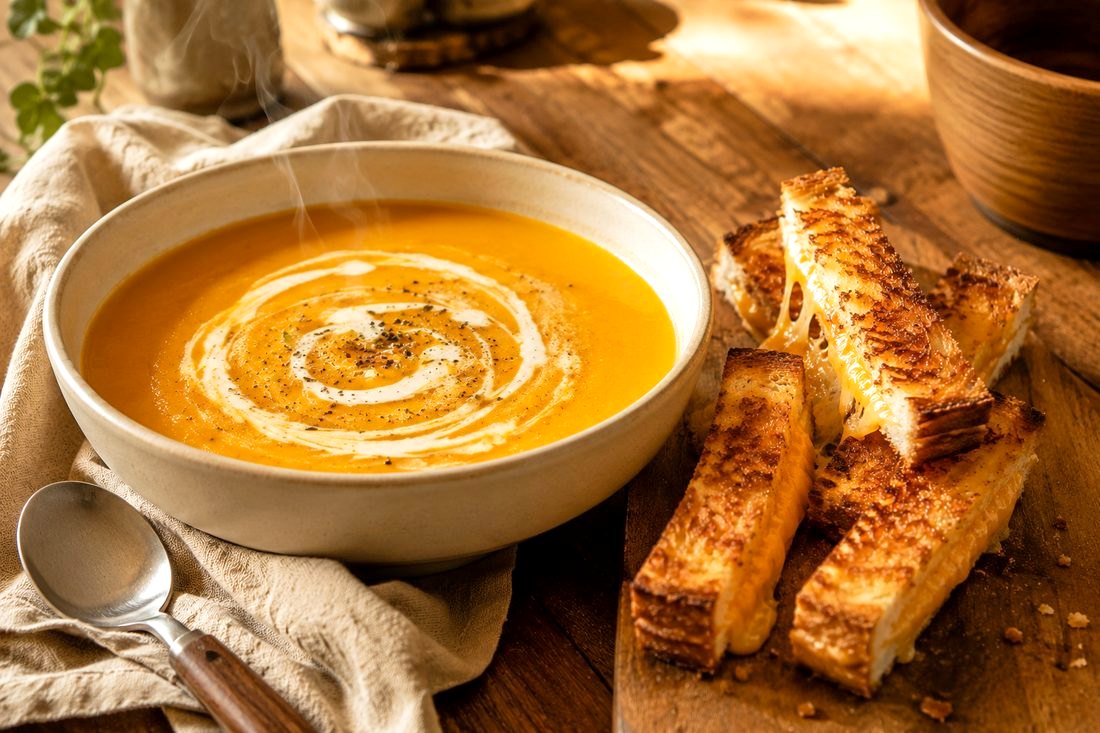 The first cozy signal of the week: Butternut Squash Soup. On the plant-based side, there are Fig Flatbread with Cashew Ricotta, Arugula and Chili-Maple, Ratatouille over Creamy Polenta, Portobello Steaks with Chimichurri and Sweet Peppers, Crispy Tofu Banh Mi, and a fresh Grape & Fennel Salad with Little Gem, Toasted Almonds and Sherry Vinaigrette. 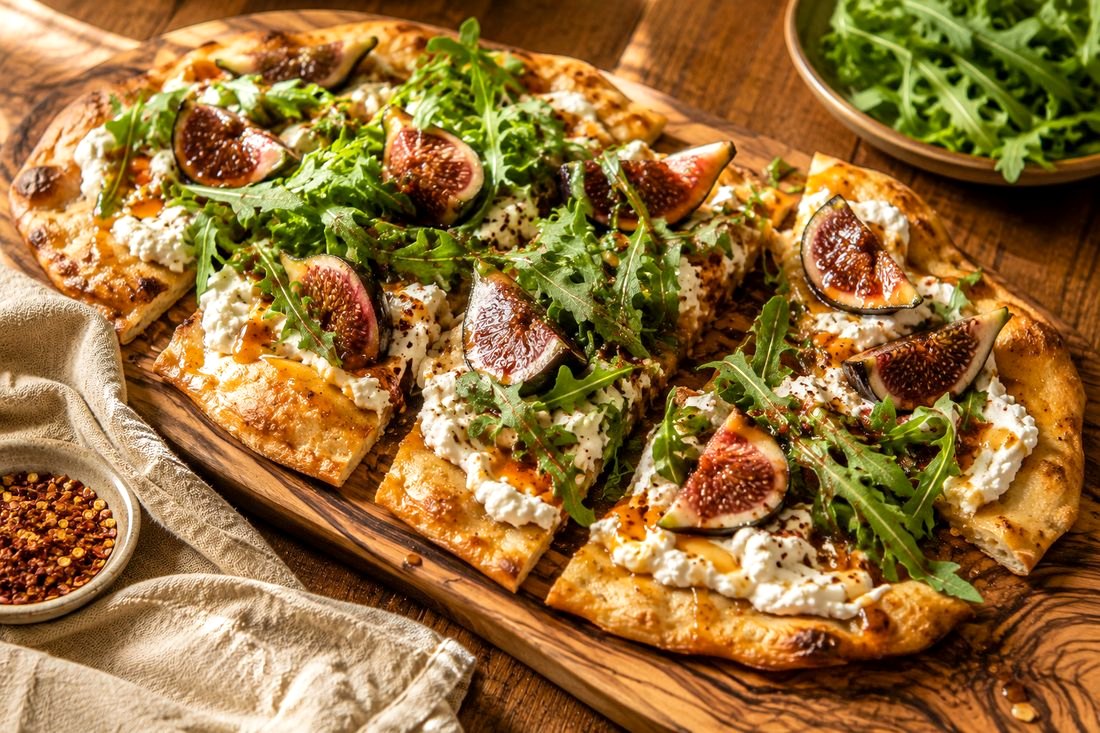 Fig Flatbread with cashew ricotta, arugula and chili-maple. That's early September to me. Not summer disappearing. Not fall suddenly arriving. One more fire, then the turn. If You're Local I'll be cooking at the Orange Home Grown Farmers & Artisans Market next Saturday, September 12 at 10:00 AM. I'm making homemade cavatelli with fennel sausage, Jimmy Nardello peppers, rapini, Sungold tomatoes and pecorino Romano. The Nardellos weren't at the market this morning, which is part of the point. The recipe gives you a direction. The market helps decide what dinner becomes. If they aren't there Saturday, a sweet bell pepper or another sweet frying pepper works beautifully. If you're nearby, come say hello. "Hey Pops, What's for Dinner?" This is ultimately why all of this matters to me. My boys grew up around a pretty global table. Italian, Mexican, Asian, Mediterranean, whatever I felt like cooking. They've always been willing to dig in. And now they'll smell something cooking and start guessing. "Is that rosemary and lemon?"
"Is that curry?"
"Did you put Calabrian chile in that?" And I love that. Because food becomes more than something sitting on a plate that fills us up so we can move on with the night. It becomes part of the night. Everybody has been moving a hundred miles an hour in different directions. Then we sit down. We eat. We talk about the food. We talk about the day. And for a little while, everybody is in the same place. Eventually you make something they really love and you hear: "Can you make that again?" And before long, that dish isn't mine anymore. It's ours. That's the part worth planning for. I'll meet you at 5:30.  Michael Chef Michael Rossi From SEASON Every Sunday, SEASON gives members ten complete dinner possibilities, five Classic and five Plant-Based, with recipes, one organized shopping list and the planning behind them. You don't need to cook all ten. You just need enough good options that dinner stops becoming another decision you have to make. The 5:30 moment, handled.™ SEASON Weekly is free every Monday. If you know somebody who loves food and could use a little less pressure around dinner, send this their way. | 