This Week's Story The Dishes That Become Yours 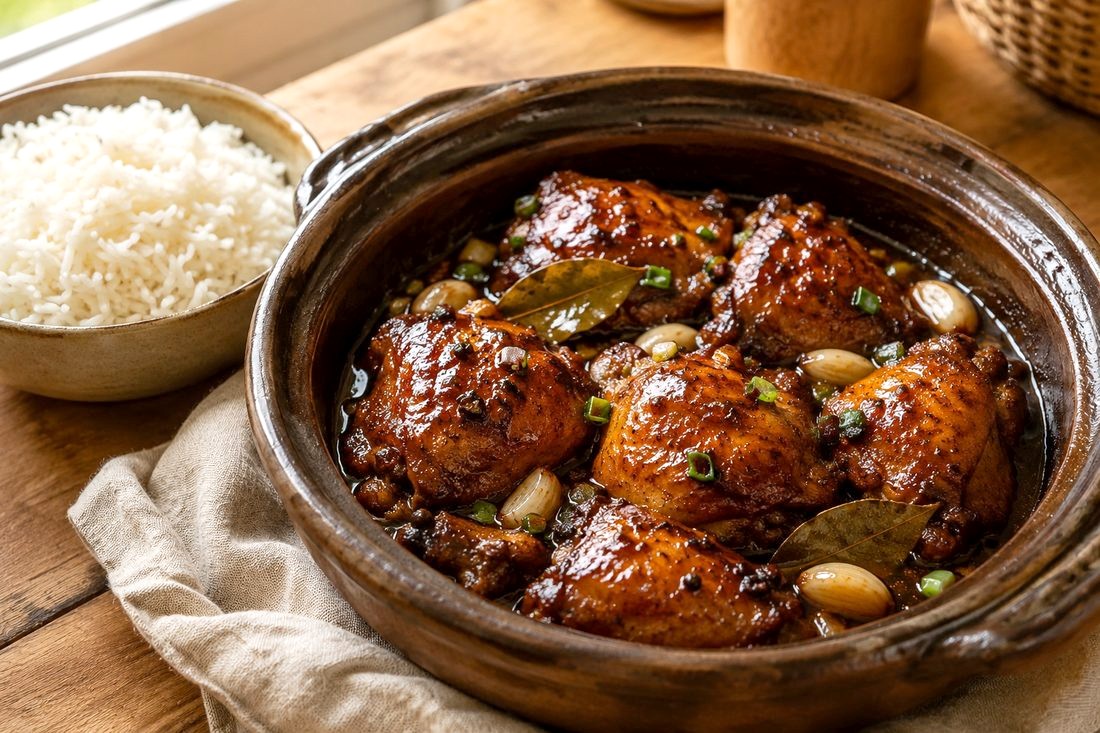 Chicken Adobo - braised until the sauce turns dark, glossy, and clinging. There's a point that happens when you've cooked something enough times. You stop looking at the recipe quite so much. You start looking at the food. You notice when a sauce has reduced enough. You know what properly cooked shrimp feels like. You can tell when a piece of dough needs another minute of kneading, or when a soup needs acidity, salt, or simply more time. You start to understand what you're looking for. That's one of my favorite things about cooking, and it's something I want to keep teaching here. Not how to become a chef. How to start thinking like one. Because once you understand what makes a dish work, something that once felt like restaurant food suddenly becomes something you can make at home. Maybe it's chicken adobo. Maybe it's pork souvlaki. Maybe it's a shrimp tostada. And one day somebody at your table asks you to make it again. That's when it starts becoming yours. Learning What to Look For I've been cooking for a long time, and I still think one of the biggest differences between following a recipe and really learning to cook is understanding the result you're trying to get. A recipe can tell you 25 minutes. But it can't taste the pot for you. It can tell you to reduce a sauce. But eventually you need to recognize what a properly reduced sauce looks like. It can tell you to cook shrimp for two or three minutes. But the better lesson is knowing that moment when the shrimp has just changed color, is still plump and juicy, and you almost wonder if it needs another few seconds. That's the part I love teaching. Because those little things carry over. Once you understand balance in one sauce, you start recognizing it in another. Once you learn what properly cooked shrimp looks like, you don't have to relearn it every time you open a different recipe. You're building instincts. And this week gives us a lot to play with. Start Here: Chicken Adobo Chicken adobo is one of those dishes that looks incredibly simple because, in a lot of ways, it is. Chicken thighs. Vinegar. Soy. Garlic. Bay leaves. Peppercorns. A little sweetness. Rice. But simple food still has to be balanced. What I love about adobo is the relationship between the vinegar, soy and richness of the chicken. The vinegar should make your mouth water. It shouldn't make you wince. That acidity cuts through the richness of the chicken and keeps the dish from feeling heavy. Then comes the soy. People sometimes think of soy sauce simply as salty, but there's so much more happening. It brings that deep, savory quality that becomes the backbone of the sauce. The garlic starts sharp but cooks down until it's soft and mellow. The peppercorns give you a little bite in the background. And all of it starts coming together as the chicken braises. Then watch the sauce. This is important. At the end, you uncover the pot and let that sauce reduce. You're looking for it to become darker. Glossy. Almost tacky enough that it starts clinging to the chicken. The chicken itself should be tender, but I don't want it cooked so far that it becomes stringy and collapses. Then take a spoonful of that sauce and put it over plain rice. If the vinegar gives you that little mouth-watering tang, followed by the savory soy and richness of the chicken, and suddenly that plain rice feels like it was always supposed to be there... You're pretty close. Look at the sauce, not just the clock. That's cooking. We're Not Compromising the Technique. We're Organizing It. This might be one of the most important things I can teach you about getting dinner on the table during a busy week. Good food doesn't necessarily require you to do everything at 5:30. Take the pork souvlaki we're cooking this week. You can cut the pork and marinate it with lemon, garlic and oregano ahead of time. You can make the cucumber and tomato salad. Have the hummus ready. Get the feta out. Then when dinner comes around, you grill the skewers, warm the pita and put everything together. Nothing about the food has been compromised. The pork still needs to be grilled properly. It still needs that char. It still needs the flavors that make souvlaki taste like souvlaki. You've simply moved some of the work to a better time. The same goes for the adobo. Measure the ingredients ahead. Smash the garlic. Have the rice ready if that makes your evening easier. Whether you braise it on the stove, use another appropriate cooking method, or make the whole dish ahead and reheat it, the goal is the same: Cook it properly when it needs to be cooked. Preparation and cooking don't always have to happen at the same time. A restaurant doesn't start thinking about dinner when the guest sits down. We shouldn't either. Plan. Shop. Prep. Cook. Repeat. Shrimp Tostadas: Know When to Stop 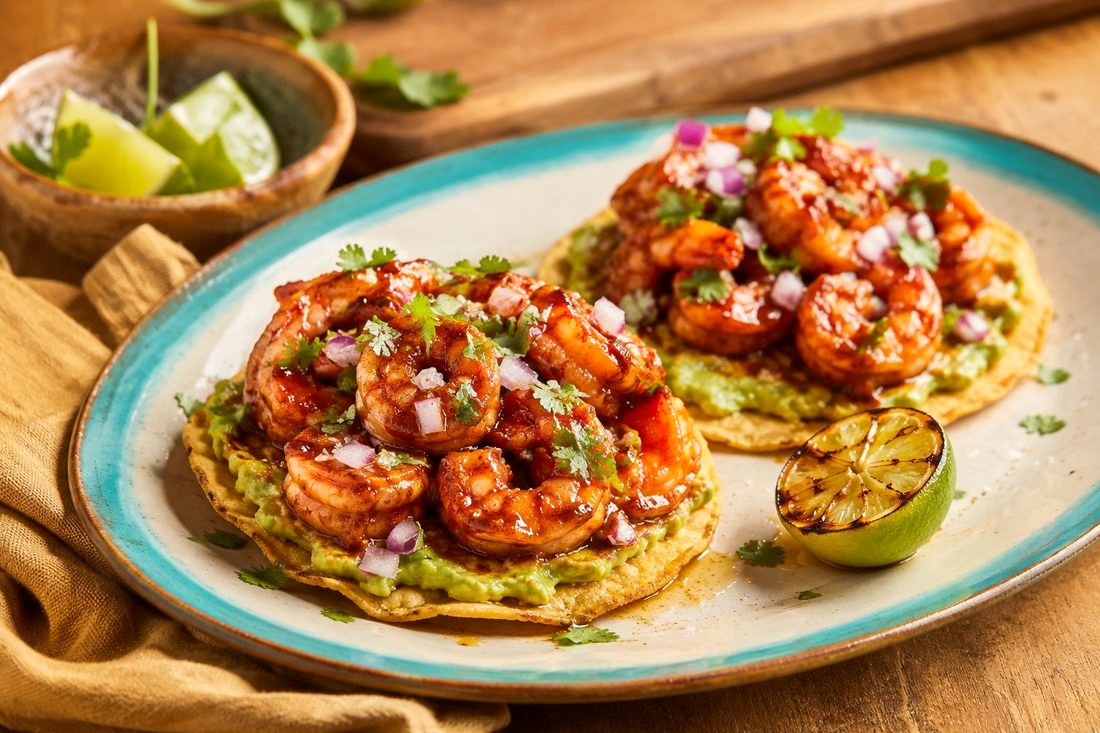 Shrimp Tostadas - glazed, not drowned, on a crisp tostada with avocado and lime. Now let's go in the complete opposite direction. Adobo gives you time. Shrimp does not. Shrimp is one of those ingredients where a few extra moments can change everything. I cook shrimp tostadas at home quite a bit, and what I'm looking for is that point where the shrimp has just changed from gray to barely orange. Still plump. Still juicy. A little bounce when you bite into it. There's often a moment when you look at the shrimp and think: Is it done? That's usually when I start paying very close attention. Because once shrimp goes too far, it gets dry and tough quickly. For this week's tostadas, we're cooking it with chipotle, tomato and garlic, then piling it onto a crisp tostada over avocado with onion, cilantro and lime. And there's another lesson here. The sauce should coat the shrimp, not drown it. I want the sauce just tacky enough to cling. When you bite into it, the sauce should feel like part of the shrimp. Not something poured all over it afterward. And this is also a great place to Cheat with Style. Buy the tostada shells. Buy peeled shrimp if that makes your night easier. Those shortcuts don't change what makes the dish good. Spend your attention on the things that matter. Cook the shrimp correctly. Plant-Based Should Still Feel Like Dinner I want to talk about this because I think the plant-based side of SEASON can sometimes be overlooked. It shouldn't be. When I build a plant-based dish, I don't think: What can we give someone who isn't eating meat tonight? I think about the plate the same way I would think about any dinner. What is the center of it? Where is the sauce? Where's the texture? Do we have crunch? Acidity? Richness? Heat? Something fresh? Something that makes you want another bite? Because plant-based food shouldn't feel like an afterthought. 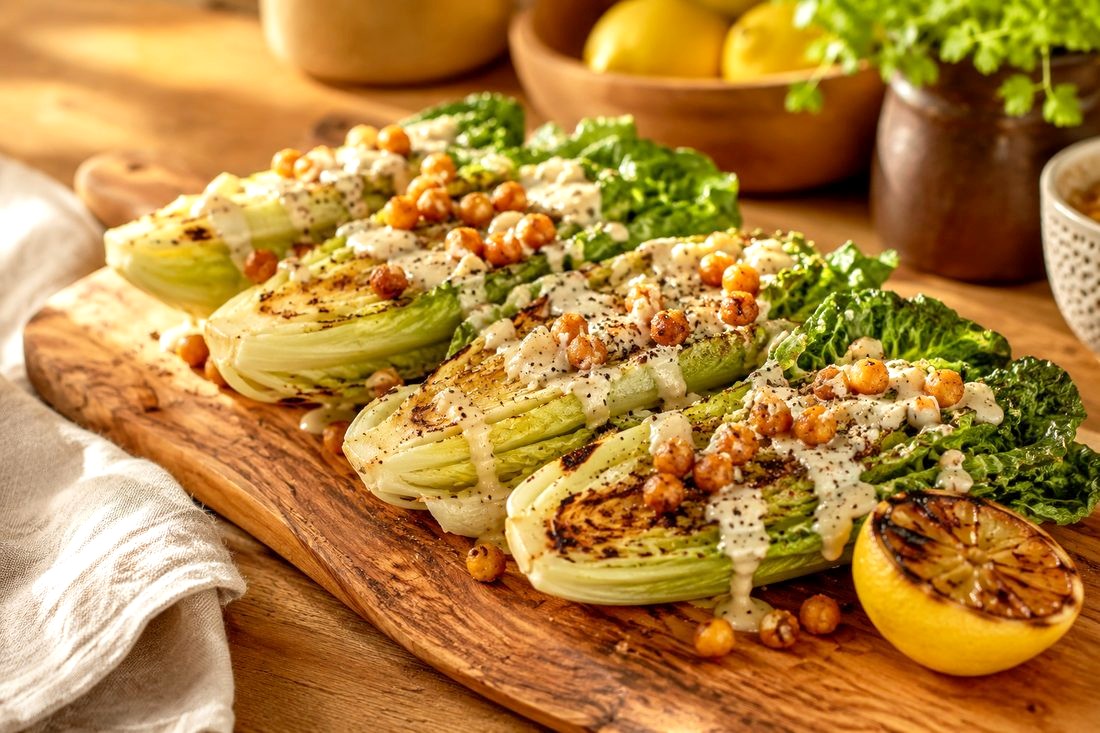 Grilled Caesar - romaine kissed by the grill, still crisp inside. This week there's Buffalo Cauliflower, where you get spice, sauce, crunch and that familiar celery combination. There's Vegetable Pot Pie, with puff pastry and a rich vegetable filling. Who doesn't want that? And there's a Grilled Caesar, where simply putting the romaine over heat changes the whole salad. You char the cut side just enough to get that smoky edge while the middle stays cool and crisp. Then you have the creamy dressing and crispy chickpeas bringing another layer of texture. That can be dinner. And if you're grilling a steak and want to make one of the plant-based recipes as a side? Do that. There aren't a lot of rules here. The goal is to cook something delicious. Ten Dinners Aren't Ten Assignments This week moves around. Filipino. Mexican and Baja-inspired flavors. Greek. Philly. A Cobb salad. Korean-inspired japchae. Vegetable pot pie. Buffalo cauliflower. That variety is intentional. But I also know that when someone sees ten dinners, it can look like a lot. So I want to make something clear. They're not ten assignments. They're ten possibilities. Pick one. Pick two. If you have the time and three of them really speak to you, pick three. That's it. The point of giving you choices is so that on Sunday you don't have to open five apps, scroll the internet and ask everyone in the house: What do you want for dinner this week? We've already done that work. You get to look at the week and say: That one. This Week at the Table Classic Chicken Adobo vinegar-soy braise, garlic, bay Shrimp Tostadas chipotle shrimp, avocado, lime Pork Souvlaki lemon, oregano, cucumber, feta, pita Smoked Turkey Cobb bacon, avocado, egg, blue cheese Philly Cheesesteak ribeye, onions, provolone Plant-Based Buffalo Cauliflower
Loaded Baked Potatoes
Sheet-Pan Japchae
Vegetable Pot Pie
Grilled Caesar with Crispy Chickpeas If you want one place to begin: Start with the Chicken Adobo. When It Becomes Yours I've made thousands of dishes in my career. I've cooked cuisines from all over the world, studied a lot, made mistakes, repeated things over and over, and I'm still learning. I'm still a culinary student. And I think that's part of why I enjoy SEASON so much. I get to take some of the things I've learned and give them to you in a way you can actually use at home. But the best thing that can happen isn't that you make one of my recipes perfectly. It's that you make it once. Then again. And somewhere along the way you stop having to think about every single step. You know what the sauce should look like. You know how the shrimp should feel. You know what you can prep in advance. You taste something and know it needs a little more acid or a pinch of salt. You start trusting yourself. And then someone at your table looks up and says: That's the ultimate compliment. Because now you've had success with it. You know you can make it again. And eventually it stops being something Michael Rossi told you how to cook. It becomes yours. That's what I hope we're building together every week. I'll meet you at 5:30. 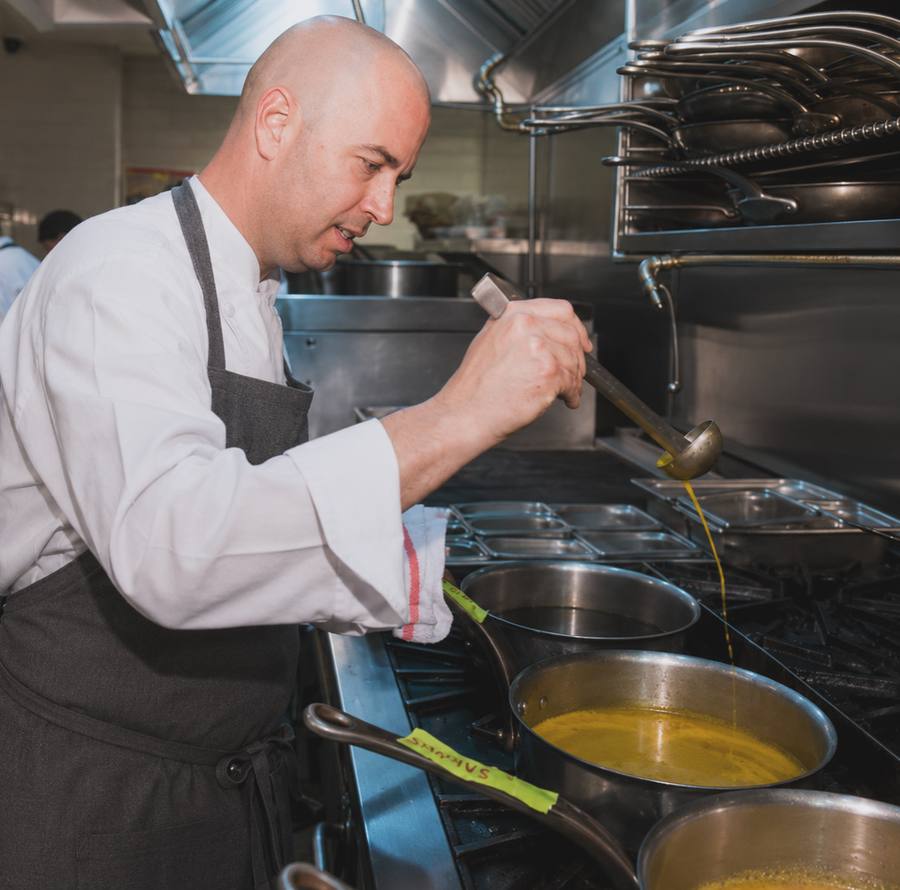 - Michael Chef Michael Rossi From SEASON Want Us to Plan the Week for You? SEASON Weekly is where we share what we're seeing, cooking and learning. SEASON takes the next step - the weekly dinner plan, recipes, shopping and prep organized for you so you're not starting from scratch every night. SEASON Weekly is free every Monday. If you know somebody who loves food and could use a little less pressure around dinner, send this their way. | 