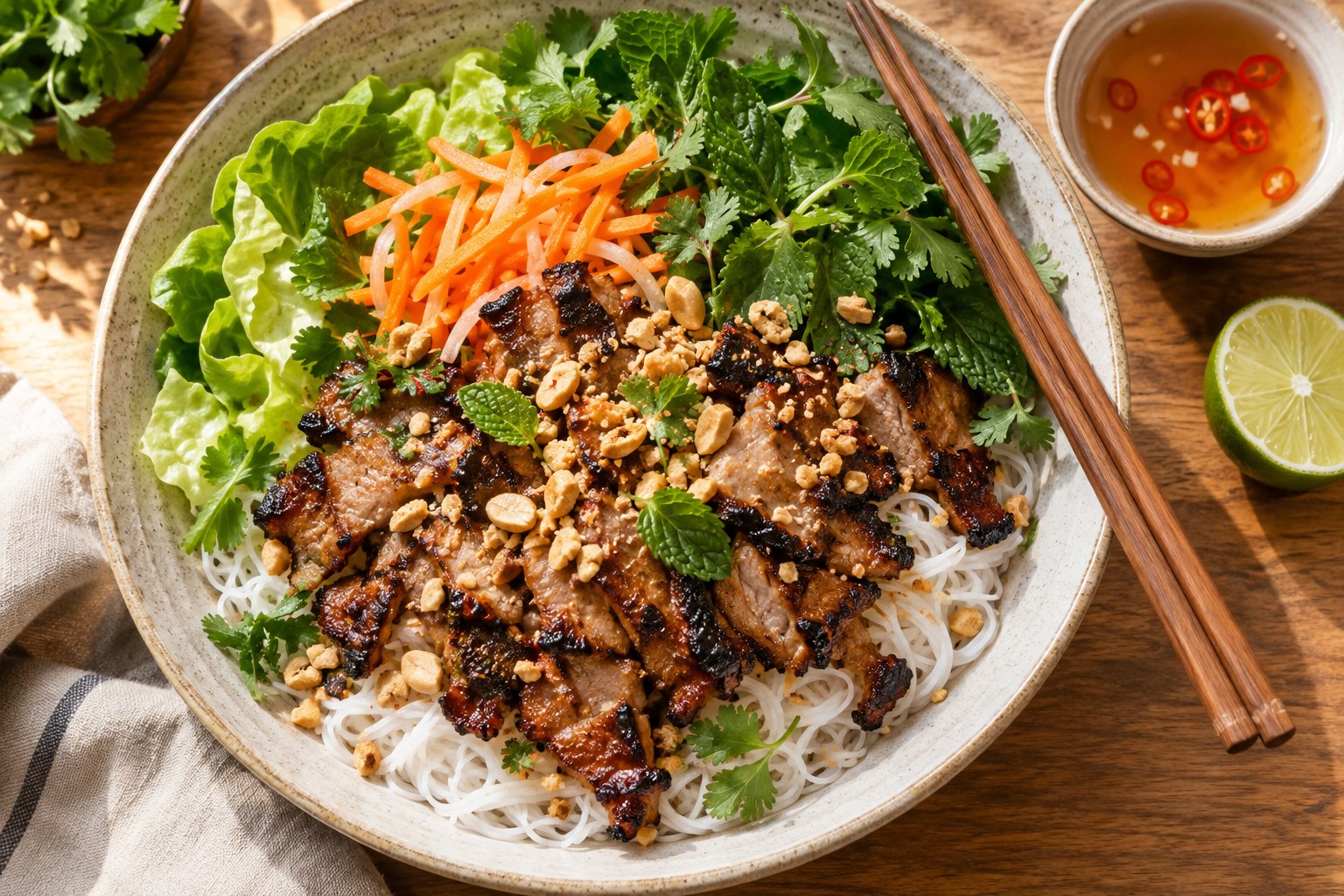
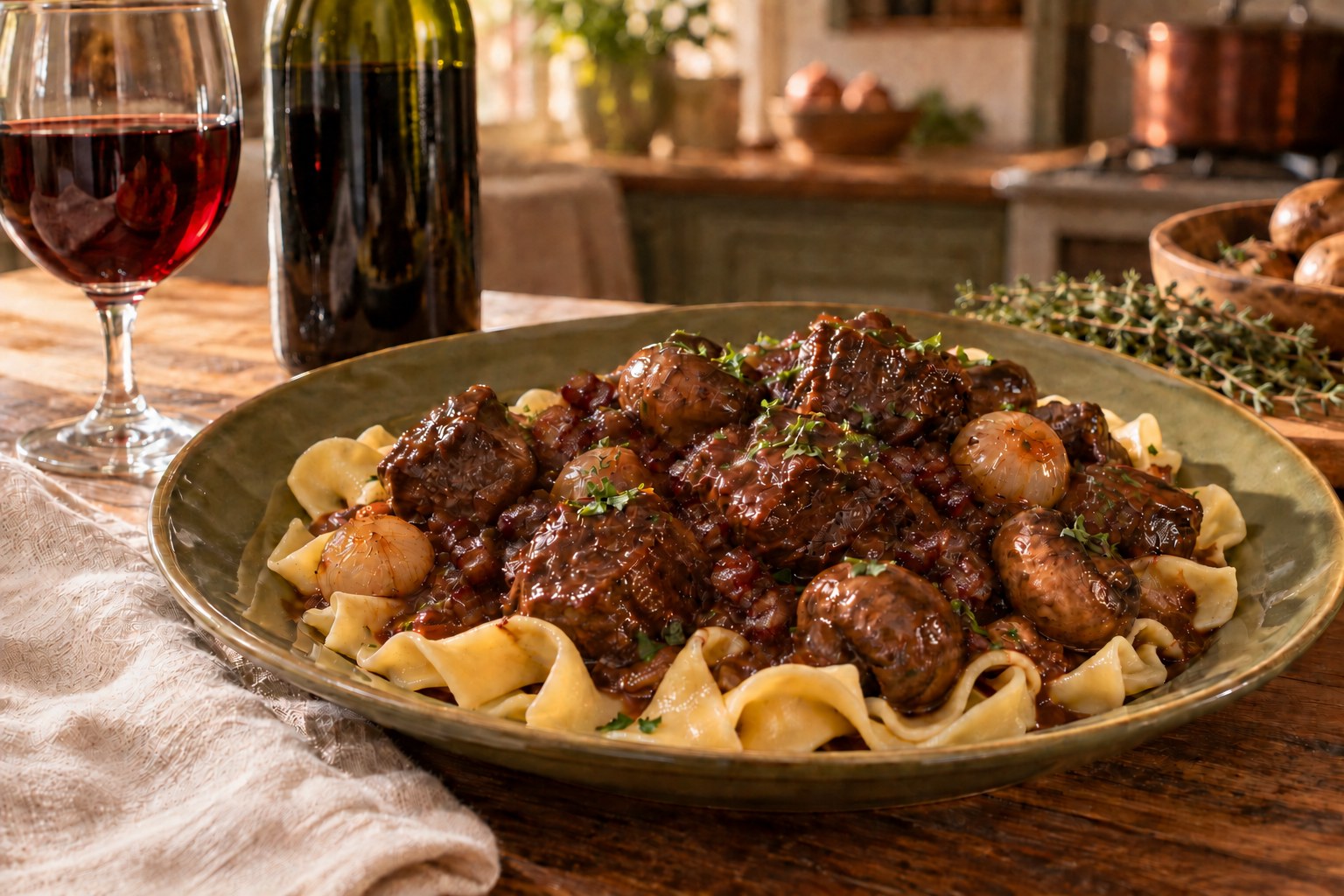
This Week's Story Fast and Slow There are two dinners on the board this week that could not look more different. Monday is thin pork on a screaming-hot grill, and you are eating in about twelve minutes. Saturday is beef chuck, a bottle of red wine, and most of a day. One is about the fastest thing we have run. The other is the slowest. Same week, on purpose. Most people think that is the whole choice in home cooking. You either have time or you don't. Fast every night until it turns into a chore, or the big slow cook you only get to once in a while. I built this week to show you those two ends are not opposites at all. Here is what both dinners have in common. Neither one is hard on the night you eat it. The pork is fast because the work happened the night before. The bourguignon is easy because the work happened once, in the morning, and then it cooked itself. Different speeds, same trick: the effort is placed at the right time, not crammed into 5:30. That is the whole idea this week. Fast food is not careless food. Slow food is not necessarily hard food. It comes down to where the effort goes. Monday: Twelve Minutes, Because Last Night Did the Work Monday is bun thit nuong, Vietnamese grilled lemongrass pork over cold rice vermicelli. It is one of my favorite kinds of dinner. Bright, herby, everybody builds their own bowl at the table. And on Monday evening, the pork itself cooks in about twelve minutes. Twelve minutes is only possible because of five minutes the night before. You slice the pork thin and let it sit overnight in lemongrass, garlic, fish sauce and a little brown sugar. While you sleep, that marinade does the work. It gives the pork time to take on the lemongrass, garlic and fish sauce, and sets the surface up to char. By Monday there is nothing left to do but grill and build the bowls. And the one thing that matters Monday is char. The sugar in that marinade is there to burn a little. Get the grill properly hot, then leave the pork alone until the edges blacken. If it comes off evenly brown, you cooked it, but you did not make it. Those blackened edges against cold noodles, fresh mint and cilantro, pickled carrot, crushed peanut and nuoc cham poured at the table - that contrast is the whole dish. Fast, but not careless. The care just happened last night. Saturday: Seven Hours, Because You Placed the Work Correctly Saturday is the other end of the week. Beef bourguignon asks you for time, but not for attention. About twenty-five minutes of real work at the front, and then it takes care of itself for the rest of the day. You brown the beef hard, in small batches, until it is genuinely dark. That browned crust on the bottom of the pan is the entire backbone of the sauce, and there is no way to add it back later. You lift it all up with the wine, get it into the pot, and walk away. Seven hours later the meat falls apart against a spoon and the house has smelled like dinner the whole afternoon. That smell takes me straight back to being a kid. My mom's pot roast going all day, and my grandmother's, braised in tomato sauce until it fell apart and spooned over rigatoni. Different kitchens, different cultures, the same smell filling the house all afternoon and the same comfort waiting at the table. That is what slow cooking has always meant to me. There is one move that separates this from a plain beef stew, and almost everybody gets it wrong. The mushrooms and the pearl onions do not go in at the beginning. Cook them for seven hours and they dissolve into the sauce and turn to mush. You brown them separately, on their own, and fold them in at the very end, so they stay whole and still taste like themselves. Braise the beef, cook the garnish apart, put them together at the last minute. That is one of the things that separates a properly made bourguignon from an ordinary beef stew. Slow does not mean difficult. It means the work is organized, done once, and placed where it belongs. Same Cook, Different Speed People assume the fast night is the lesser one, that you drop your standards when the clock is against you. I don't, and I don't want you to either. The cooking can change. The standard does not. I am not seasoning the pork any less carefully because Monday is busy. I am not cutting a corner on the braise because I have all of Saturday. It is the same care on both nights, just spent at a different time. The cooking might be different, but the thinking is the same and the attention is the same. It is the effort at the right time that makes the slow braise feel effortless, and the fast dinner feel like real cooking instead of a scramble. What This Has to Do With 5:30 This is really what SEASON is for. I am not trying to make every dinner fast. I am trying to help you know where the effort belongs before the night starts. That is the 5:30 payoff. Some of the work happens the night before, like a marinade. Some happens once and then cooks itself, like a braise. Some dinners are just naturally quick. And the standard never drops because the clock changed. When the plan is made before the rush, 5:30 stops being the moment everything falls apart. That is the whole point, whether dinner takes twelve minutes or seven hours. The whole week lives in the app at tonightsseason.com - ten dinners and one shopping list, the deciding already done before you get to the stove. This Week So look at your calendar before you look at the recipes. If Monday is chaos, that is the lemongrass pork. Marinate it tonight, get the rest of the bowl ready, and the pork is about a twelve-minute cook. If a slow Saturday opens up, that is the bourguignon. Give it the morning and it gives you the whole day back. On the plant-based side, the coconut red lentil dal is the same idea in a bowl - mostly hands-off, and the one move that makes it is the tarka, whole spices sizzled in hot oil and poured over at the very end. Cook one this week. Maybe two. That is enough. Before I go, hit reply and tell me: what actually happens in your kitchen at 5:30? I really do read the replies, and they help me understand what would make this letter more useful to you. Want to cook with me this week? Here's the dish - marinate it tonight, and dinner's about twelve minutes on the grill tomorrow. Make it and tell me how it goes. I'll meet you at 5:30. 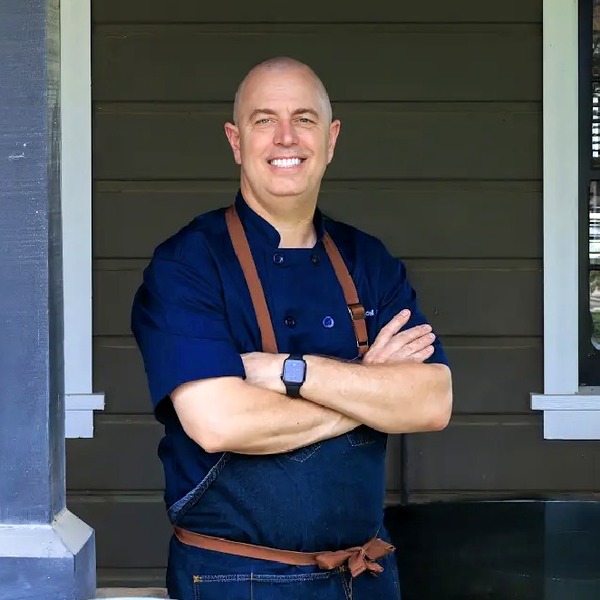 Michael Chef Michael Rossi Have a question or just want to say hello? Write me anytime at [email protected]. |